
Make Outreach Emails Personal at Scale for Link Building
Link building outreach often fails because generic templates get ignored. This article breaks down actionable strategies from experienced practitioners who have refined personal outreach at scale. Learn how to structure pitches that respect recipient time while standing out in crowded inboxes.

 CA
CA JB
JB PM
PM CC
CC JG
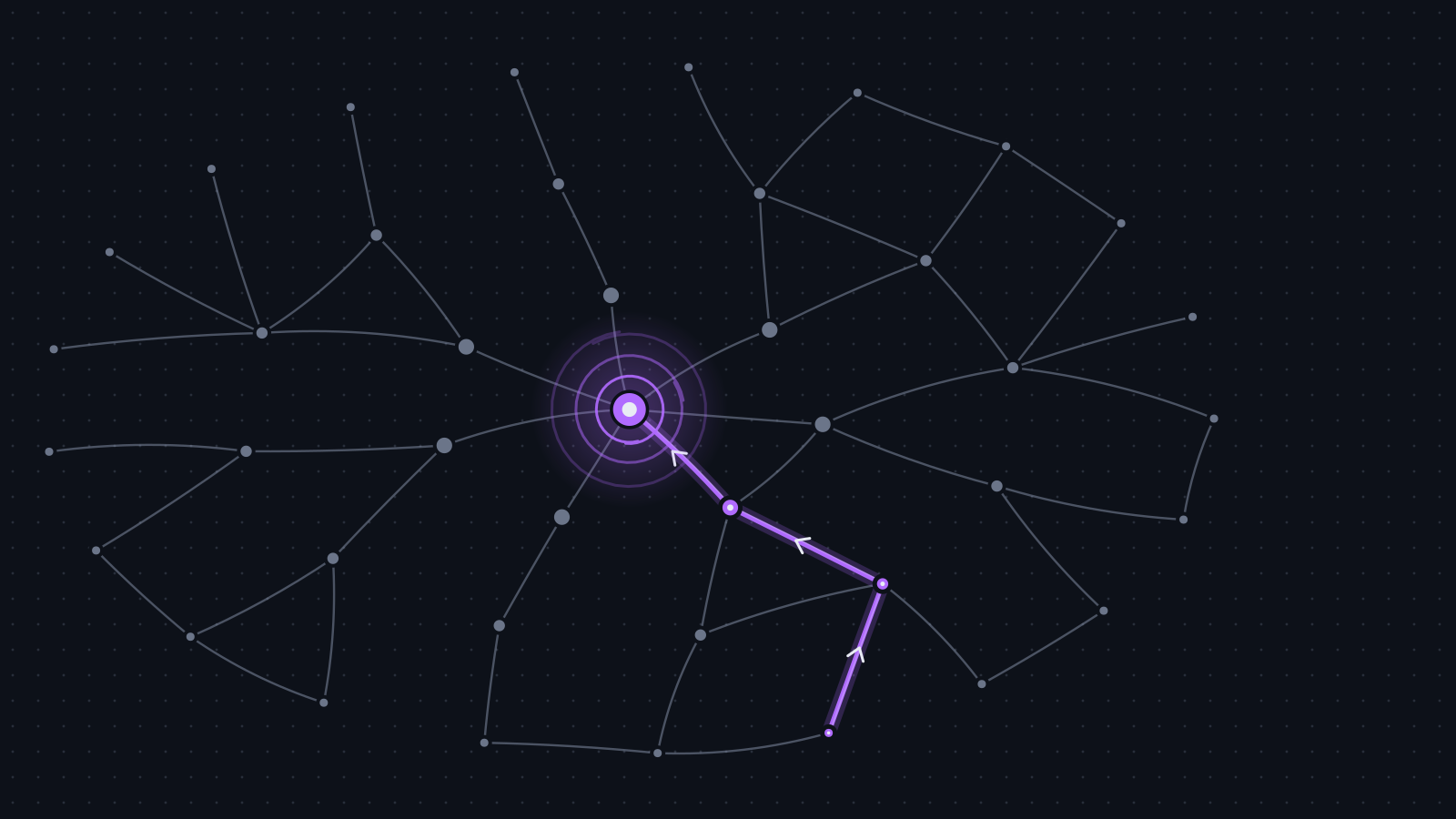
JG 6 nodes / Vaibhav Kakkar / Cameron Allen / Jock Breitwieser / Phoebe Mendez / Christopher Coussons / Jack Genesin
Write Like an Editor
The single change that lifted genuine replies was removing performance language from our first email. We used to lead with value claims and credentials because it felt efficient. In practice it made the message sound polished but distant. Now we write the first note like an editor speaking to another editor.
We point out one thing we noticed on the page and why it matters for the reader. This shift makes the conversation feel more human and less transactional. It also makes the workflow easier to sustain because we do not chase perfect persuasion. The email has one job which is to start a relevant conversation.
Build a Repeatable Voice Process
At the end of the day, reaching out to reporters can be a long process that takes a lot of time. The best way, I think, is to structure and systemize it to the best of your capability, keeping it general but leaving areas where you can personalize it. You can also use AI to help you in the process of writing it.
These days, there are AI tools like Wispr Flow that help you speak-to-text and just speak what it is that you're trying to communicate. That is a significantly faster way of being able to articulate and reach out to the reporters needed in order to build links. Even if you have to write a hundred emails, it's much easier to speak it than it is to write it out individually.
Wispr Flow has changed my ability to even reply to these types of inquiries. I can now get done five times as many outreaches just by being able to speak what it is that I'm trying to accomplish versus having to type it out... on top of this I have a system in place and structure, so it's very repeatable.
Anchor Every Pitch to Context
Jock BreitwieserDigital Marketing Strategist / SocialSellinator
Most of the time, outreach breaks when the list gets big because personalization turns into guesswork. We ran into this when scaling link outreach for a client. The team was spending too long trying to "sound personal," pulling random details from About pages that didn't actually connect to the pitch. It slowed everything down and replies didn't improve.
The change that worked was building what we call a "relevance anchor" into every email. Instead of general compliments, we only referenced something directly tied to our ask, like a specific section of their article where our client's resource would genuinely add value. If we couldn't find that connection in under a minute, we skipped the prospect.
That one rule cut our outreach list down, but reply quality went up. We started getting responses that continued the conversation instead of polite rejections or silence.
What made this sustainable is that it removed forced personalization. You're not trying to impress everyone, you're only reaching out where there's a real fit, and that naturally makes each email feel more relevant without adding extra writing time.
Tier Effort and Lead With Benefit
Phoebe MendezMarketing Manager / Online Alarm Kur
When my outreach list grew, I started sorting contacts by tier and changing how much time I spent on each. The top tier, about 10 percent, gets fully custom emails that take around 10 to 15 minutes each. The middle tier uses a template with a few personal details added. The bottom tier gets a basic template with just a name and one relevant line. This setup helps me spend more time where it pays off.
The change that got more real replies was adding a reason it helps them, not just me. Most emails focus on what the sender wants. A line about how it helps their readers shifts it. It feels useful, not like a favor.
Highlight the Specific Content Gap
Christopher CoussonsDirector / Visionary Marketing
Chris here -- I run Visionary Marketing, a specialist SEO and Google Ads agency. We do a lot of link outreach for clients and I've tested probably every personalisation approach going, so I've got a clear answer on this.
The single change that improved our genuine reply rate more than anything else was switching from personalising the greeting to personalising the reason for contact. Most people spend their personalisation budget on "I loved your article about X" -- which every recipient knows is templated even when it isn't. We stopped doing that entirely and started leading with what I call "the specific gap."
Instead of "Hi Sarah, I noticed your guide on technical SEO and thought you might be interested in..." we now write "Your technical SEO guide covers crawl budget and indexation really well, but there's nothing in there about log file analysis -- which is the bit most people get wrong. We've got data on that if it's useful."
That's it. One sentence that proves you actually read their content and identifies something specific you can add to it. It takes about 90 seconds per email instead of 30, but the reply rate went from roughly 3% to about 11%. And critically, the replies are actual conversations, not polite "no thanks" responses.
The workflow trick that makes this sustainable at scale: I batch the research and the writing separately. Monday morning, I spend an hour scanning target pages and noting the content gap for each one -- just a 5-word note in the spreadsheet. Then when I'm writing the emails later, the personalisation is already done. Trying to research and write simultaneously is what kills the workflow.
Stop complimenting people's content. Start telling them what's missing from it.
Open With the Ask Then Segment
Jack GenesinDirector / Published PR
The change that lifted my reply rate the most was cutting the intro paragraph entirely.
For years I opened outreach with "Hi {FirstName}, hope you are well. I came across your article on {Topic} and thought it was great." Every SEO writes that. Journalists and editors have filters for it, mental or literal.
Now I open with the ask, then prove relevance in two sentences. Something like: "I have an original data study on {specific topic} that fits {specific column or beat they cover}. The top finding: [one concrete stat]." That is it.
The second change was ruthless segmentation. I never write one email for a hundred people. I write three or four emails for tight clusters of twenty to thirty, where the angle genuinely fits their beat. Personalisation at the segment level, not the individual level.
This combination has moved reply rates on cold outreach from 3-4% to 12-15% consistently.
The time saving comes from the fact that you are pitching to twenty people who actually fit the angle, not a hundred who mostly do not.