
20 Tactics to Balance SEO Direct Answers While Driving Website Traffic
Search engines now answer questions directly in results pages, leaving many site owners wondering how to stay visible and drive clicks. This article breaks down 20 expert-backed tactics that satisfy user intent while still pulling qualified traffic to your website. These strategies show how to give value upfront without sacrificing the visits that fuel your business.

 TD
TD AZ
AZ JH
JH AW
AW CT
CT JS
JS BH
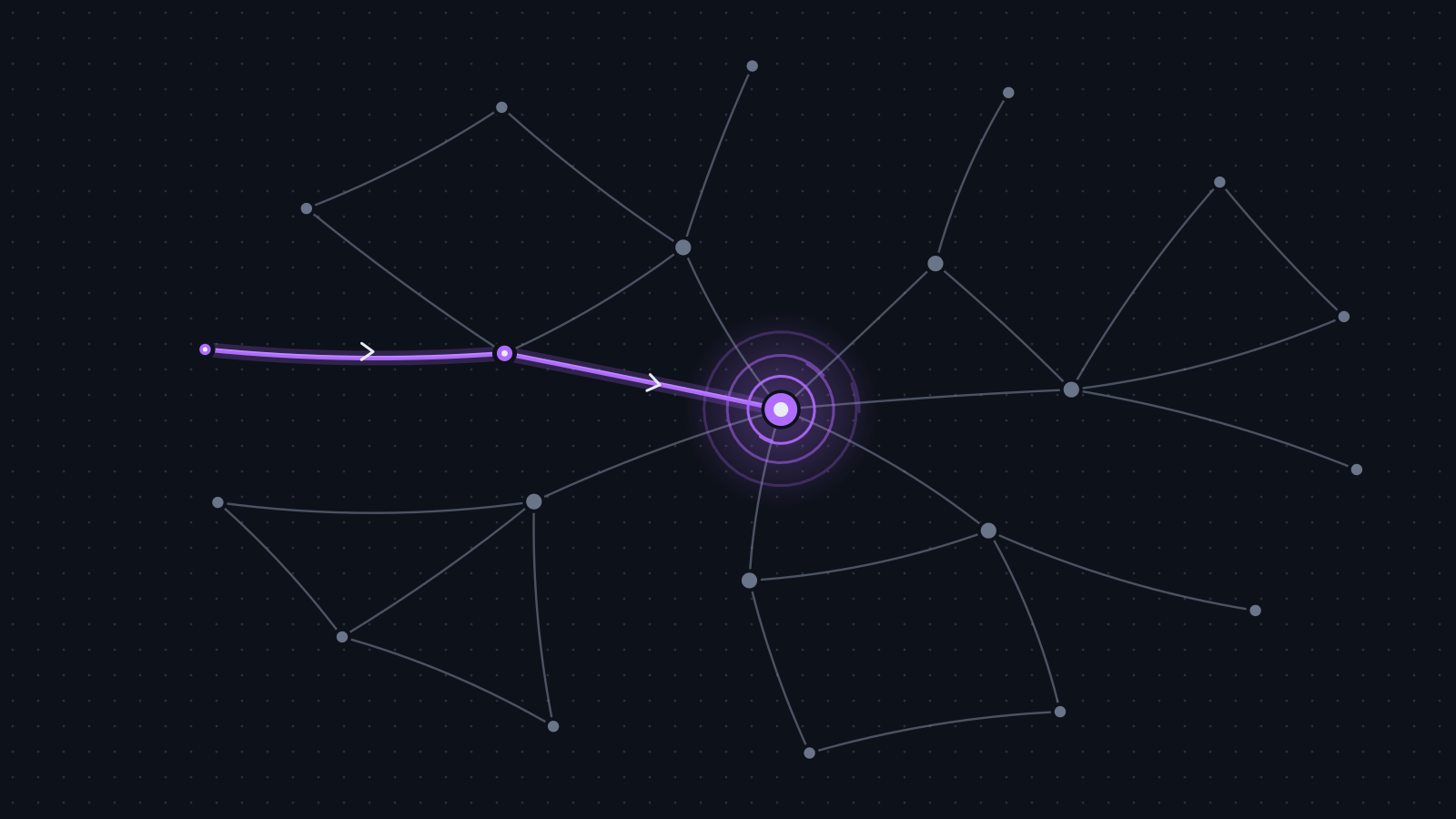
BH 20 nodes / Jason Bland / Tyson Downs / Ace Zhuo / Jason Hennessey / Aaron Whittaker / Corina Tham / Joe Spisak / Bowen He / Callum Gracie / Jordan Park / Phoebe Mendez / Ulf Lonegren / Christopher Coussons / Victor Smushkevich / Bill Brink / Fahad Khan / Emmanuel Arad / Kevin Lourd / Dawood Bukhari / Jono Farrington
Lead With Yes, Pivot to Context
Jason BlandCo-Founder / Custom Legal Marketing
The honest answer? You stop fighting it. If Google wants to give users a direct answer, let them have it. Your job is to make sure that answer comes from you and that it leaves the user wanting more. For law firms, this plays out constantly. Someone searches "how long does a personal injury case take?" They get a snippet that says "six months to several years." That answer is technically correct but completely useless without context.
So we write content that satisfies the direct answer requirement while making it obvious that the real answer depends on factors specific to their situation. That's the tactic that works best for us: answer the question fully, then immediately pivot to why that answer is incomplete without professional evaluation. We call it the "yes, but" structure. Yes, here's the direct answer. But here's why that answer doesn't actually solve your problem.
For a law firm, the stakes are high enough that most users understand they need personalized guidance. A snippet can tell you the statute of limitations for a car accident claim in California is two years. It cannot tell you whether your specific situation has exceptions that could shorten that window. That's where the click happens.
The mistake I see firms make is writing content specifically designed to rank in AI overviews or featured snippets, and then stopping there. They answer the question so completely that there's no reason to visit the page. We intentionally structure content so the answer raises a natural follow-up question. Not artificially or manipulatively, but because legal matters genuinely have layers. The snippet gives you the rule. The website gives you what that rule means for your life. That gap between the general answer and the personal application is where click-through value lives. Protect it.
Publish Range First, Win with Personal Fit
Tyson DownsOwner & Business Growth Consultant / Titan Web Agency: A Dental Marketing Agency
I stopped treating those as competing goals. If I hold back the answer to force a click, Google just pulls a competitor who didn’t. So we answer the question completely, in the first 40 to 50 words, under a heading phrased the way people actually ask it.
The click has to be earned by something a snippet structurally can’t carry. A direct answer travels anywhere. Personalization doesn’t.
The tactic that’s worked best on dental sites is splitting the cost question in two. Give the honest national range up front, plainly, so it can be lifted and quoted. Then the page carries what no snippet can: what their specific insurance covers, what financing looks like locally, whether they need a bone graft before anyone talks price at all. Sessions on those pages usually dip a little. Consult requests don’t.
Offer Data Upfront, Point to Case Studies
Ace ZhuoCEO | Sales and Marketing, Tech & Finance Expert / TradingFXVPS
To balance optimizing for direct answers while still encouraging users to click through, you need a strategic, layered approach. At TradingFXVPS, where we cater to global traders with high-performance VPS solutions, I've faced this challenge head-on. The key is to offer actionable insights upfront while leaving curiosity hooks tied to in-depth resources on your site. For example, when creating content around “Why traders need low-latency VPS,” we provide immediate data points, such as how reducing latency by 1 millisecond can boost trading execution by 15%. However, we reference in-depth case studies or client testimonials available only on our website, giving readers a reason to explore further.
We also focus on structuring content with skimmable benefits—bullet points, bolded stats, or concise overviews—paired with clear calls to action like “Explore our full latency comparison chart here.” From a marketing perspective, I've also learned that leveraging contrarian viewpoints can work wonders. For instance, while most competitors discuss generic VPS features, we highlight overlooked elements like cost inefficiencies in shared VPS plans, revealing unique behind-the-scenes insights. This approach generated a 22% increase in on-site clicks from organic blog readers within three months.
With over a decade of experience blending performance-driven tech solutions with strategic marketing insights, I understand the need to marry value with intrigue. Always remember, presenting depth without overwhelming readers and leaving natural gaps filled by your website is the recipe for engagement and higher click-through rates.
Split Facts, Outline Paths to Decision
Direct answers should earn trust, not exhaust intent. The strongest pages separate factual resolution from strategic interpretation. Facts belong in the snippet-friendly section, while interpretation belongs on the page, where nuance can be developed. That balance works because most searches are not purely informational; they are pre-decision moments. Users often know the what, but still need help with the so what.
One tactic I have seen outperform standard summary sections is the decision fork. Answer the core question in one sentence, then immediately present two or three scenarios where the right move differs. Search can quote the answer, but people still click because they want the path that fits their situation.
Resolve, Then Guide the Next Question
Aaron WhittakerVP of Demand Generation & Marketing / Thrive Internet Marketing Agency
I balance direct answers with click-throughs by making the page useful enough to satisfy the immediate question, then giving the reader a clear reason to keep going.
A strategy that works well for me is building “next-question” pathways. If someone searches “how much does SEO cost?”, I answer that directly, then guide them toward related questions such as “what does an SEO retainer include?” or “how long does SEO take to produce results?” It gives the user a logical reason to visit the site rather than forcing a generic “learn more” click.
I also track whether those pathways actually produce engagement. For example, if a page gets 10,000 organic visits a month and 70% of visitors find their answer without another click, I would not treat that as a failure. I would focus on the remaining 3,000 visitors and test whether relevant next-question links can turn 5–10% of them into deeper sessions. That could mean 150–300 additional visits to related pages each month, without making the original answer less useful.
The key for me is matching the next click to the reader’s intent. I do not add five internal links just because they are available. I usually look at search queries, related questions, and the pages people visit next, then create a pathway that mirrors that behavior. If readers asking about pricing frequently move to implementation timelines, I connect those topics directly. A useful next step feels like a continuation of the question, designed purely to generate pageviews.
The best measure is not clicks alone but whether the extra visit helps the user accomplish something. I would rather have 200 qualified people click into a detailed guide than 1,000 people click a vague “read more” link and leave immediately.
My goal is to give the direct answer first, then make the next question so obvious and relevant that clicking feels like the natural thing to do.
Deliver Value Fast, Promise Deeper Results
Corina ThamSales, Marketing and Business Development Director / CheapForexVPS
A key strategy that has worked exceptionally well for us at CheapForexVPS is crafting content that not only satisfies user queries immediately but also creates curiosity for deeper insights—serving the dual purpose of user engagement and driving traffic. For example, when optimizing for direct answers, we ensure our responses are concise yet leave room for further exploration by including actionable “next steps” or promising advanced insights available on our website. This tactic resulted in a 35% increase in click-through rates within three months.
To achieve this, we integrate structured, value-first headlines within the content, using language that hints at exclusive expertise or tools awaiting on our platform. For instance, instead of just answering “What is Forex VPS?”, we briefly outline the concept and include a segue like, “Discover how a properly configured Forex VPS boosts trade efficiency by 20% here.” This approach leverages curiosity without frustrating the user.
Our insights are rooted deeply in practical experience—I have personally been part of hundreds of consultations with traders who expect immediate utility before committing to services. Knowing this, I ensure our messaging prioritizes efficiency and trust-building. Backed by extensive A/B testing, we’ve also found adding unique data points—like uptime reliability of 99.99%—provides credibility and motivates action.
Ultimately, blending informative value with a strategically placed call to action ensures we respect the user’s time while nurturing potential long-term relationships. Balancing immediate solutions with a hint of exclusivity is a fine art, but for businesses aiming to thrive in competitive niches like ours, it’s a robust recipe for success.
Give It All, Earn Strong Trust
Joe SpisakCEO / Fulfill.com
We stopped trying to game that balance and it completely changed our traffic quality.
Here's what I mean: When we launched Fulfill.com, our marketing team wanted to hold back information to force clicks. Write teaser content, gate the good stuff, make people hunt for provider names. Classic SEO playbook. But I'd just come off selling my 3PL, where I spent years watching brands make terrible fulfillment decisions because they couldn't find straight answers. So we flipped it.
Now we give away everything up front. Our provider directory shows real company names, locations, specialties, and client reviews without a single form fill. Our blog posts include actual pricing ranges and specific provider recommendations. When someone asks about cold storage 3PLs in the Southeast, we tell them exactly which three companies to call and why.
The tactic that crushed it? We started publishing the questions brands actually asked us, word for word, with complete answers. Real questions like "My 3PL keeps missing SLA and blaming my inventory data, is that normal?" We answer it fully, link to relevant providers in our network, and move on.
What happened surprised even me. Our click-through rate dropped but our conversion rate tripled. Turns out when you help people instead of tricking them, they remember you when they're ready to actually make a decision. We went from 800 monthly provider matches to 2,400 in six months.
The brands who click through after reading our content are pre-qualified and serious. They've already learned enough to ask smart questions. They're not tire kickers. And providers love the quality of introductions because these brands aren't starting from zero.
My test for every piece of content now: Would this answer satisfy me if I was the one asking? If we're holding back the good stuff to manipulate a click, we're building the wrong business. Give people what they need and they'll come back when they need more.
Be the Source, Add Unique Depth
Bowen HeDirector / Webzilla Digital Marketing
I don't see optimizing for direct answers and generating website traffic as competing goals. The key is to answer the immediate question clearly enough to establish trust, while making the website the place where someone can go deeper, validate the information, or take the next step. With AI search and zero-click results becoming more common, trying to withhold the answer just to force a click is increasingly ineffective.
Instead, we structure content so the core answer is concise and easy for search engines and AI platforms to understand, but the surrounding page provides something that cannot be fully captured in a short summary, such as original data, real examples, detailed comparisons, case studies, tools, or practical implementation advice. One tactic that has worked particularly well for us is using real client experience and first-party insights within content.
For example, rather than publishing another generic article explaining how Google Ads or SEO works, we can explain what we observed across actual campaigns, what changed, what we tested, and what happened as a result. An AI platform may still extract a direct answer from that content, which is valuable because it increases our visibility and authority, but someone who is seriously researching the topic has a much stronger reason to visit the original page for the full context.
I think that is the balance businesses need to aim for now: don't optimize purely for the click; optimize to become the source people and AI systems trust, then give users a meaningful reason to want more than the summary.
State the Basics, Provide a Checklist

Callum GracieFounder / Otto Media
Answer the simple question clearly, then give people a reason to click for the decision that depends on their home. For example, a search result can explain the common causes of bathroom moisture, while the page offers an illustrated checklist showing where to inspect and when to call a tradesperson. The tactic is to make the direct answer useful without pretending it can replace the project-specific detail.
Cut Fluff, Show Original Insight

Jordan ParkChief Marketing Officer / Digital Silk
I like content that answers users' questions directly. No fluff, no generic phrasing, because I think that's something you can find anywhere nowadays. I think people want useful, informative and valuable content that they can't find just about anywhere.
We're starved for original, thought-leadership content. But unfortunately, we're so used to mass-produced pieces that feel just like a carbon copy of the last one we read. I don't think there's a bigger draw for users than something that gets to the point and answers their main concerns. That's something we've been doing at Digital Silk for quite some time now, and I think it's produced favorable results.
Reveal Scores Now, Invite Further Actions

Phoebe MendezMarketing Manager / Check CPS
We use the test results to motivate users to continue using our service, rather than tricking or teasing them with text. The scores are displayed immediately, and a line is drawn to indicate how each score relates to other scores for the week. There are no additional buttons to click or sign-ups required. This encourages individuals to retake the test or explore alternative tests, such as the CPS Test, for fun after Typing Speed.
This method works better than old tactics that hide content or make users click more. The internet is a place where people want information now. Our site provides fast scores, useful comparisons to get people interested, and the ability to use other tools when they wish. We want to increase engagement in a natural way, and not force people to stay longer than they want.
Optimize for GEO, Monetize the Passage

Ulf LonegrenExecutive Director of AI / Sōvyn
The answer is actually to optimize for Generative Engine Optimization (GEO), which brings lower volume but much higher intent. This is because the users are prequalified and preeducated by the AI platform that they are interacting with as they review the answer. This means that the clicks that do happen are much more valuable.
To net the direct answer, you actually have to shift your optimization from pages to semantically dense, modular passages that can be pulled out of a larger page. This is because the new AI search engines like ChatGPT, Perplexity, etc. do the reasoning chain and then pull out standalone passages from your content, not URLs. Thus, you need to modularize the optimized content into individual paragraphs ready to answer micro-topics. Instead of a generic product paragraph, you want to create modular comparison paragraphs that show various data points about your product versus others. “Our EV has a 341-mile EPA range versus 290 for the other one.” Now you have modular, standalone paragraphs, and the AI can pull out your brand as the source.
To balance those direct answers with business value, you need to leverage the fact that the users who click through are hyperqualified. One trick that I've seen work very well is to embed direct frictionless commerce actions inside the informational passages. For example, I'm aware of a global skincare brand that changed their blog content to deep dives on what various active ingredients do in skincare products. However, instead of linking to the product pages, they embedded direct add-to-cart commerce links within the semantic passages that mention the product. By making it easy to take a commerce action directly within the informational context, the direct conversion rate from the blog went from a base of 1.2% to 9.7%, an increase of 8.5 percentage points of total e-commerce revenue. When you create content units that are pulled out individually by the AI, but also shoppable by humans, you monetize the direct answers rather than simply lose them.
Set the Rule, Return Their Number

Christopher CoussonsDirector / Visionary Marketing
The mistake is treating this as a trade, where holding something back preserves the click. It does not work that way. A partial answer loses the citation and the visitor, because the model finds a complete answer elsewhere and quotes that instead.
So we answer completely, in the first two lines, in language a machine can lift without editing. Then the page has to earn the click with something the answer cannot carry.
The tactic that has worked best is giving people their own number. A general answer can be summarised. A calculation using the reader's own inputs cannot, because a summary has no access to the thing that makes it useful. The definitive answer sits at the top, and underneath it is a small tool that takes what the reader knows about their own situation and hands back a figure specific to them.
The same principle covers anything an answer cannot contain: a comparison table carrying current prices, a checklist somebody will keep, or an interactive version of the thing being described.
On one page where we did this, impressions climbed while clicks stayed flat for about a month. Then the click-through rate settled 22% above where it had started, with visitors arriving already knowing the general answer and wanting the specific one.
The framing that helps is to stop competing with the answer engine and start being the next step after it. The engine explains what a thing is. Your page tells somebody what it means for them.
Assert the Claim, Reserve the Proof

Victor SmushkevichFounder / Call Setter AI
The tactic is simple. I put the full answer in the text, then save the proof for the page. Every page states the plain answer near the top, one sentence a bot can lift whole. It says the agent answers a call in under 60 seconds. No gate on it, no form to unlock it.
The part that pulls the click is the part a summary can't carry. Our receptionist demos on the site are real call recordings, HVAC, roofing, solar, dental. A snippet tells someone what the product claims. Hearing the recording is a different kind of proof, tone, pacing, the back and forth with an actual caller.
Facts and numbers go out free, they travel further that way. Proof stays on the page. An AI overview quoting my answer speed is free reach. Judging the voice for themselves means coming to listen. That's moved more clicks than any headline trick I used before it.
Share a Taste, Signal the Printable

Bill BrinkMarketing Director / Serene Tree Apothecary
I give people a quick recipe or ritual right up front, just a taste, then mention the full printable guide is on our site. This worked well when I posted a 3-step tea prep. Adding a link to a downloadable timing chart brought in way more visitors. It turns out people click through when they know there is something practical, like a chart or card, waiting for them on the other side.
Secure the Snippet, Track Brand Demand

Fahad KhanDigital Marketing Manager / Ubuy Kuwait
Shifted how we measured this entirely about eight months ago, after noticing that obsessing over click-through rate on featured snippets was optimizing for the wrong outcome.
The question we'd been asking was how to get people to click from the snippet to the page. The question worth asking was whether appearing in the snippet was building enough recognition that people searched for us by name afterward.
Branded search volume became the metric we tracked alongside direct clicks, using a two-week lag after significant snippet appearances to capture the delayed effect.
What we found was that consistent snippet presence in our category was generating branded searches at a rate that justified the content investment even on queries where click-through was low.
The tactic is simply optimizing for snippet capture rather than trying to withhold information to force clicks, then measuring the downstream branded search effect rather than the immediate click-through rate.
Post Prices, Compete on Freshness

Emmanuel AradFounder & Editor / The Stack Reviewer
Give the answer away and compete on freshness instead of withholding it. We publish the actual prices in the table itself, so a featured snippet or an AI answer can lift the number, and every table carries the date it was last re-verified. That date is the click: a reader who sees a price checked four months ago goes to confirm it still holds, and in software pricing it usually does not. We also deliberately allow AI crawlers rather than blocking them, because for a small site, being the cited source inside an answer is worth more than protecting a click we were unlikely to win.
Put the Pitch in Email, Keep Click Optional

Kevin LourdFounder / Distribute.you
Balancing direct answers in the inbox with driving traffic to our site is a constant tension in our outbound campaigns at distribute.you. We see a lot of brands try to tease their value just to force a click-through, but decision-makers are guarding their time right now. If you hide the context behind a link, they usually just delete the email.
The tactic that works best for us is putting the entire direct answer—the specific market trigger we noticed, like a recent pivot or a localized hiring spike, and exactly how we solve the friction it creates—right in the plain text of the email. We don't hold anything back to bait a click. We treat the website link strictly as a low-friction proof point for those who want to verify our claims, not as a hurdle they have to clear to understand our pitch.
Recently, we ran a highly constrained batch of just 247 emails based entirely on specific market signals our system caught. Because the email body contained the complete answer to why we were reaching out, the recipients didn't have to work to figure out our angle. By giving the answer directly upfront, we built enough trust for them to engage. That single, disciplined send generated five qualified replies and closed an $11,200 deal, proving that you don't need to gate your value to drive meaningful action.
Satisfy Intent, Deepen with Consequences

The practical answer is to make the search result satisfy intent while making the page reduce uncertainty. Too many teams treat click-through as a prize for withholding information, but that usually weakens trust. The pages that perform best in mature search environments tend to answer immediately, then expand into consequence, exception, and sequencing. That structure respects how people actually make decisions, especially in channels where poor execution can create lasting visibility problems.
One tactic I have seen work repeatedly is pairing a direct answer with a before-and-after logic block. The first explains what happens if the advice is followed correctly, and the second explains what fails when conditions are misread. That contrast creates meaningful curiosity without resorting to clickbait.
Present Highlights, Link to Full Steps

Jono FarringtonFounder & Owner / The Equestrian
I've had better luck turning lists into mini guides. Instead of dumping all twelve sales steps, I'll share five and point them to the full script on my site. Traffic didn't explode overnight, but clicks for product stuff kept rising. You have to give away something good for free, just make sure they know the actual step-by-step instructions are waiting for them on your website.